Disparateum Review
tags: review, ttrpgMany thanks to Donny M on Discord & Alex V for proof reading
⚠️Please read this on desktop!⚠️
Prologue
If you forget about it, ignore it
The City is wide enough for all of us
— Disparateum by Rathayibacter
Disparateum is a Book, a City and a TTRPG. Not in any particular order.
If you bought the TTRPGs for Trans Rights in Texas, Bundle for Ukraine or No ICE in Minnesota bundles off itch, you already own Disparateum. You should go read Disparateum rather than reading this review. It’s only 85 pages long, cover to cover, and some of those pages are even blank.
Disparateum is most easily understood by being read, rather than having someone with a biased opinion explain it to you 2nd hand. And spoil it for you.
How to play Part 1
Disparateum is a TTRPG downstream of Chuubo’s Marvelous Wish-Granting Engine, no dice; only traits & tokens. And a GM(Tower). The closest game I could pin it to mechanically is Wanderhome,
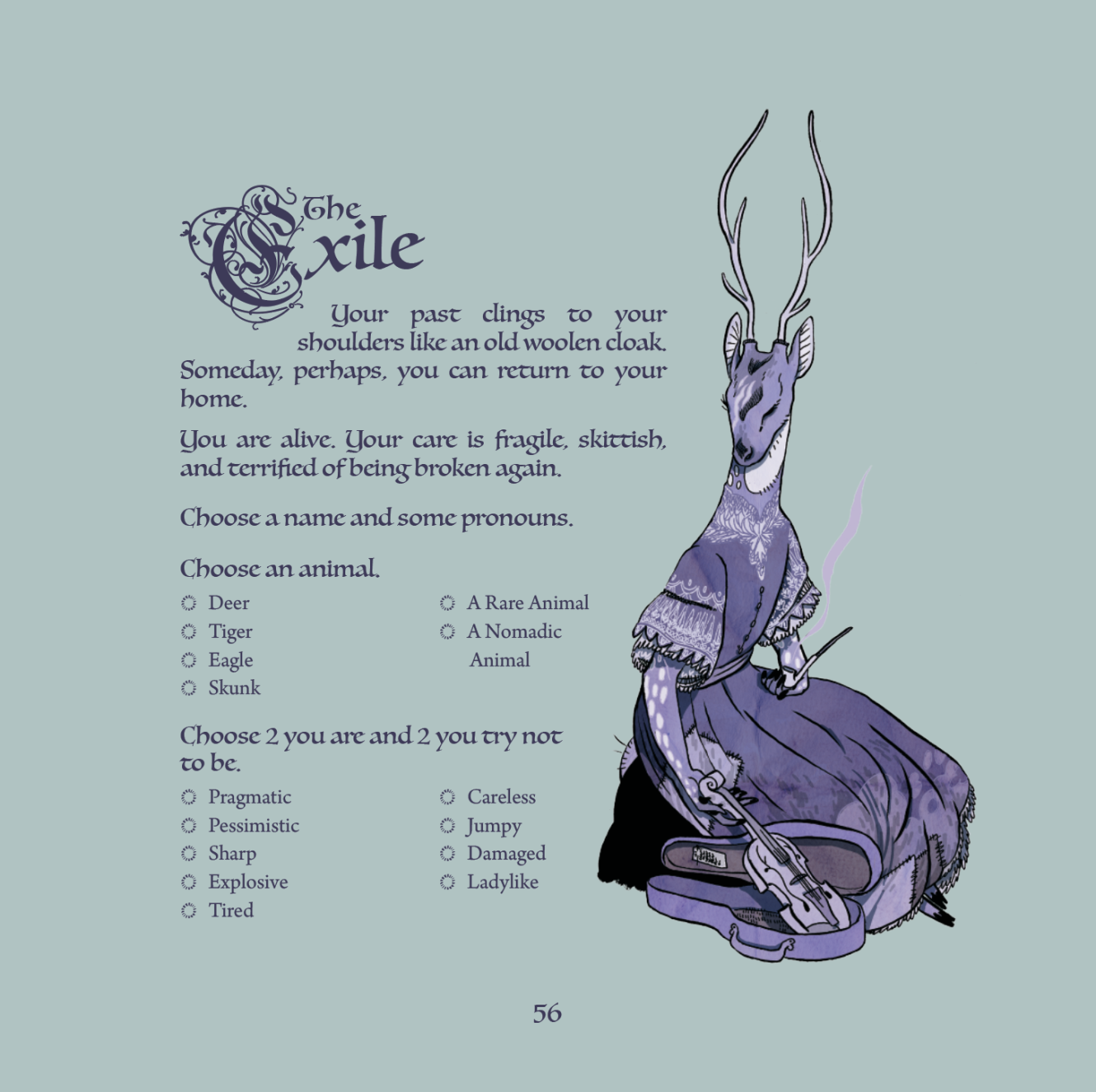
The Exile playbook from Wanderhome
except instead of finding a narrative archetype playbook for a character, finely tuned for tension, you get this: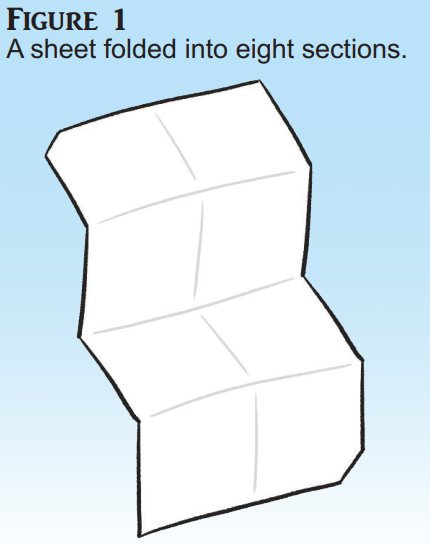
A Player begins with writing their character’s Name & Role written in the top left section. A Role is a special Trait that is also your “Class” in a vaguely traditional sense. As of now (Disparateum Act II) there are 6 roles; Knight, Thief, Sage, Bard, Mage and ██████. The Player then gets to choose 3 more Traits, each getting their own section of the sheet. Traits come in the various categories; Role (you can only have one Role), Skills, Motivations, Bonds, Destinies and more.
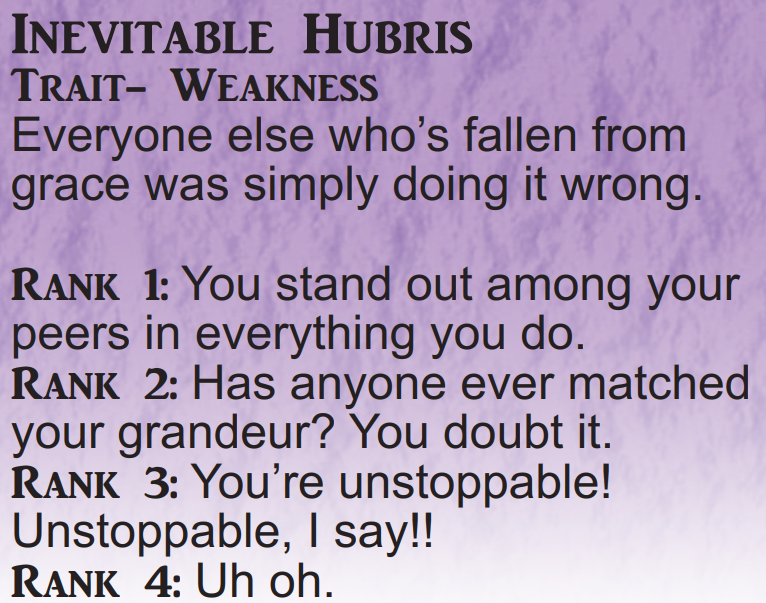
Players are encouraged to make up their own Traits. Example Traits are scattered throughout the book, including my favourite; Inevitable Hubris:
Players starts with 7 ranks to distribute amongst their character’s 4 Traits. As an example, if I were to write up The Detective from Disco Elysium as a Disparateum character, he might look like this1:
| The Detective The Seer Trait — Role A mystic, bearing knowledge beyond the scope of belief. Rank One: The Seer is drifting through life, careless and carefree. Rank Two: The Seer knows what nobody else does, but struggles to convey it properly. Rank Three: The Seer can ask anyone any question at any time. |
Amnesiac Trait — Weakness Rank One: You remember nothing about yourself, your identity consigned to oblivion. Rank Two: Memories ooze in, glacial & fractured. What you think of these glimpsed flickers of your past self? |
Detective Trait — Motivation The only thread you have on why you're here and were you're going. Rank One: An incident has occurred; how does it entangle with the people around you? |
|
| Not Truce With the Furies Trait — Bond Your mind & body is rendered into 24 distinct voices; each vying for your focus. Rank One: The voices phase in and out offering (sometimes) useful commentary. How are they bickering about what you perceive? |
Act I
Do you ever think about how TTRPG reviews are unlikely to review the elements of a TTRPG in the order the book linearly presents them? Character creation is usually not the first thing you are presented in a TTRPG. It’s usually
what is an RPG? then What are the vibes of this particular RPG? and more recently Here are our suggested safety rules for this RPG.
After the cover, Disparateum starts off with a page containing only this:
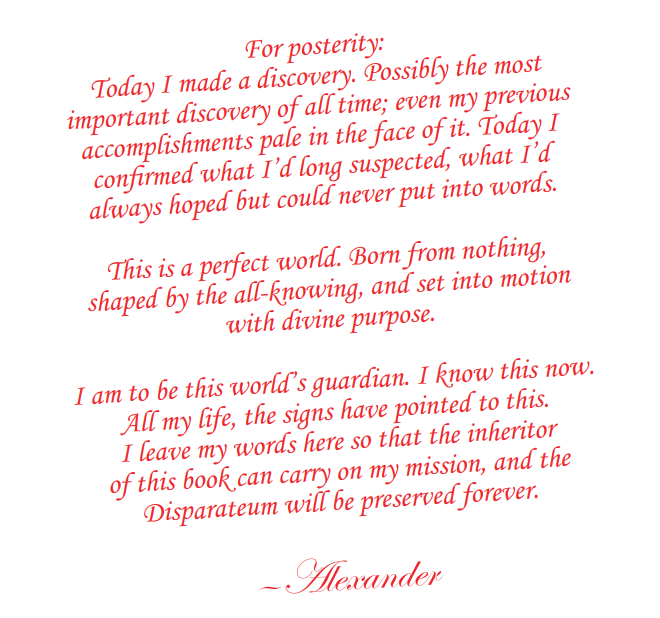
Alexander's note page 2
Spoilers: Alexander is a cunt.Page 2 (actually 6) then goes back to those normal TTRPG beginning topics. Disparateum is a City (and the peripheral existence encompassing it) that is at the convergent point of multiple layers of reality, known colloquially as “The City”. The same page also has safety rules, to which Alexander feels the need to pipe up:
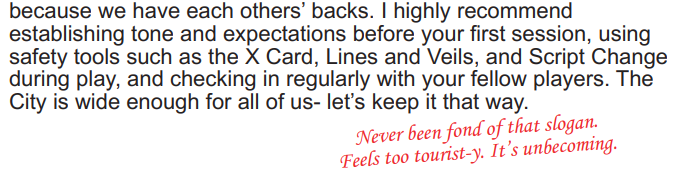
Alexander's note page 6
Like I said, a cunt.Next; the City and its various destinations; but first its Traits. It is a Layer after all.
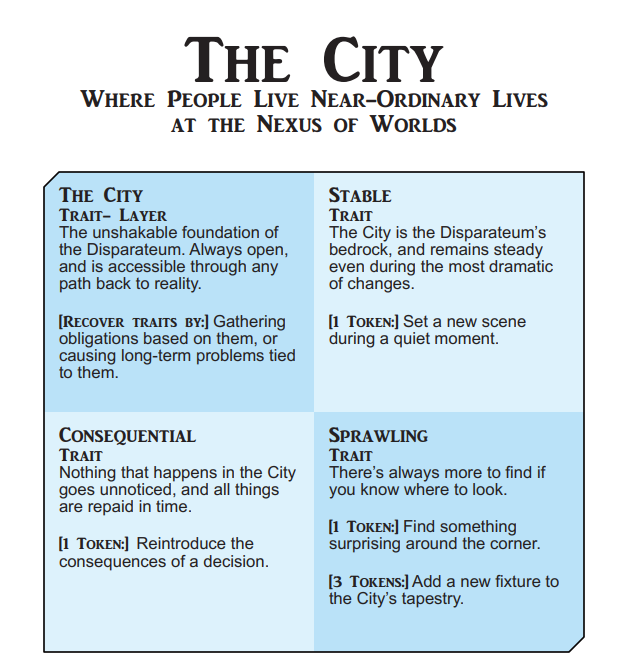
The City Page 8
Rathayibacter (Rath from here-on) paints magical and charming locales;- an ice-cream parlor run by a powerful Witch who takes it as a personal challenge to have every flavour known to the world
- An old black smithy, with a retired Blacksmith, now operated by his three daughters (rumours go that his daughters are part divine)
- A an ever-expanding non-euclidean museum that curates nearly everything (we learnt a couple of things the hard way) called the MOAM (Museum of Arts and Magic). The Curator is a 15ft tall angel with torn off wings, still bleeding. She leaves a trail of blood to clean up as she does her rounds around the MAOM’s wings.
- An undercity with an egomaniacal cult dead set on destroying the City; they are relatively ineffective and residents of the city see them as a bit of “charming local flavor”
and many more!
The City feels like a place you want to explore, to talk to people, to find little bits of everyday magic tucked away in its alleys & tunnels.
Once you finish the section on the City, we reach the first (technically second) Layer; The Dreaming.
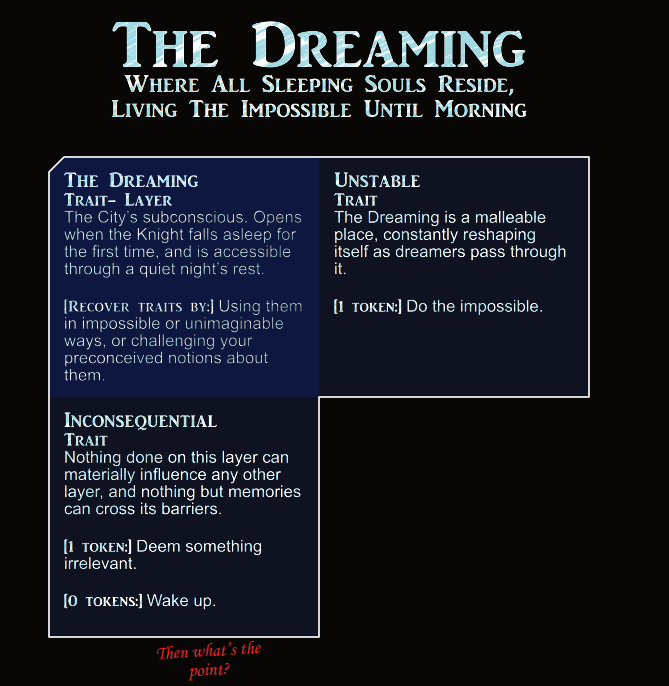
The Dreaming page 14
You enter The Dreaming by falling asleep; experiencing the city through the lens of slumber. Music permeates everything, except for one building (Why? That’s for you to find out if you wish). The lost wing of the MOAM lies here; it fell in after some incident that fractured reality. It was dedicated to curating cursed & hostile magic artifacts; you could fish some out if your feeling brave enough. Several other faces first introduced during the day can be found in the dream; they take on new fantastical elements. And here betwixt the layers; is where Disparateum really begins to shine.How to Play: Part 2
Disparateum is a TTRPG. Disparateum is a Book. It wants you to play it on paper. Layers are different layers of reality that lie upon each other; they all have a unique method for reaching them. They are composed of 2-4 squares in a 2x2 layout, with the intention that you print/z-index them out in play and do this:
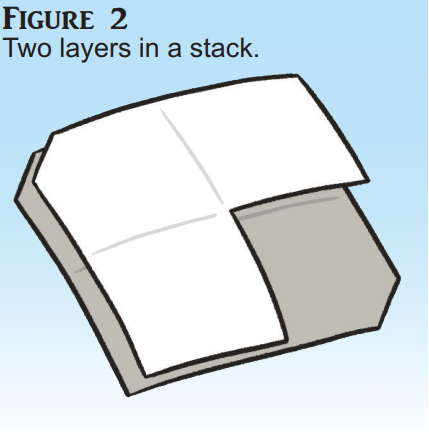
Layer figure from page 21
↑This is called world hopping. Every Layer has a different method of recovering player Traits (always denoted in the top left quadrant) and their own unique traits in each quadrant. As you can see with the L-shape of the Dreaming, when it is layered on top of The City, the trait Sprawling will still be active. In Disparateum Act I & II there are 12 layers total.The page for World hopping (page 21) is labelled page 5. It’s after the Traits page (page 20) used for character creation labelled page 4. And before that is the last page of the Dreaming (page 19) which is labelled page 19. Alexander comments on the phenomena:
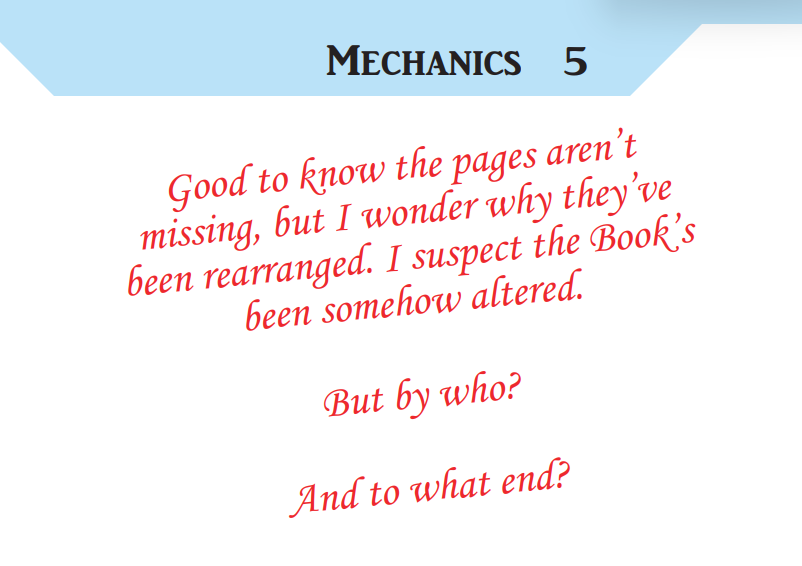
Alexander's note page 21 (or page 5)
Do you ever think about how TTRPG reviews are unlikely to review the elements of a TTRPG in the order the book linearly presents them? Character creation is usually not the first thing you are presented in a TTRPG. But it is often second. Someone in Disparateum shifted it back even further.Several people have said to me in response to mentioning Disparateum; “I have no clue what this game is about from it’s Itch page.” That’s because the Itch page isn’t a description of a TTRPG, it’s a blurb for a Book; one that is very annoyingly coy about letting on about its narrative.
You can’t finish character creation with Disparateum until you’ve started it’s narrative, first having to read through a lovingly
scribed
penned newcomers guide of The City.
Intermission
In which I am going rant about a pet peeve of mine
Ergodic Literature is such a wide net that I hazard to call it a genre. Maybe narrative tool or format? Its when the text is organized in such a fashion that it is non-trivial to navigate. More modern use of the word I find is when meta textual elements are used to support the narrative. An observer reading the same text as you, scrawling their thoughts in the margins. A webcomic that tells a PoV story from an off-screen characters in its description below the comic itself2. A video game where a character telepathically talking to you is conveyed through the hoverable lore tooltips3. I find myself a sucker for ergodic literature, between that and my love of magical diaspora cities4, Disparateum is a TTRPG & City that hits right in my critical strike zone.
I’ve been having a problem with Ergodic Literature of late, to which I find Disparateum a sweet relief;
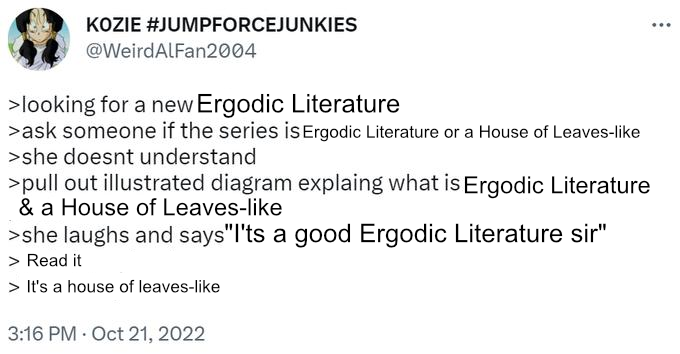
-look I guess it could be worse.
Honestly all those things I listed are really cool; unfortunately its just human nature to get fatigued if something starts getting over saturated.
Usually the easiest way to tell something is a house of leaves-like is if its majoritively horror, and the creator will tell you it’s inspired by House of Leaves, because they sincerely & genuinely love that book.
Like
Rath
for example:
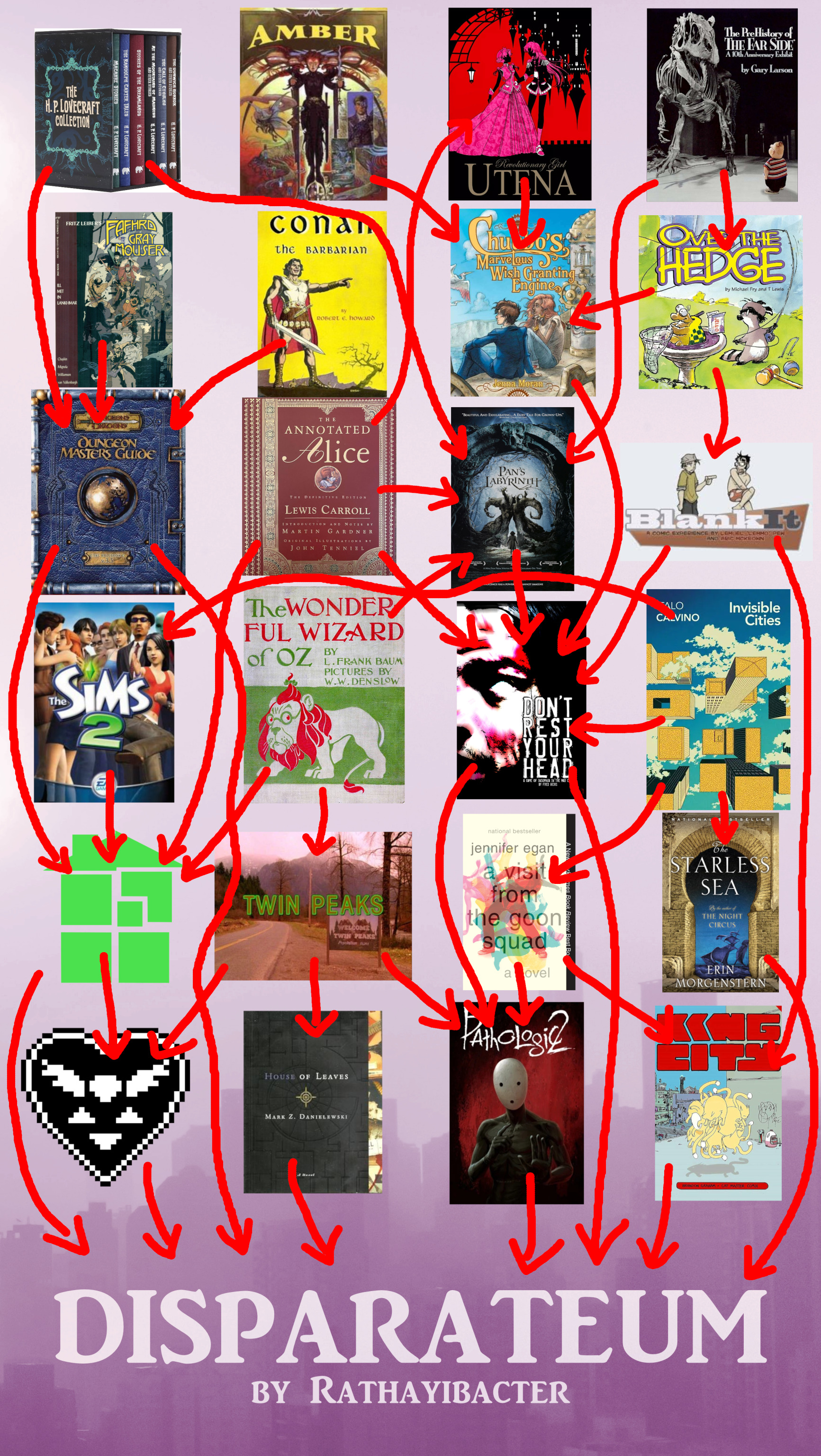
"Required Reading for Act III" Infographic made by Rathayibacter
I don’t think the TTRPG/City/Book is a House of Leaves-like; I can see the inspiration from Homestuck or Utena in it’s writing just as much as House of Leaves. Disparateum does have some horror elements, which the game utilizes its meta-narrative structures (and gameplay) well to enforce, but over all I find it a surreally hopeful game. Disparateum never uses any of it’s inspirations as a crutch5; it is wholly confident in its unique identity. It feels fresh.Act II
Disparateum is about mutability. Living things are mutable; The City is alive; it & it’s people breathe, sleep and dream. The Layers portray the mutability of The City & the world, but one can’t move through the world without being changed.
Player characters are incredibly malleable. The when of leveling up a trait by a rank or adding a brand new trait to their character sheet, is up to the the Player. If it feels narratively appropriate you can do it. It doesn’t even have to be a permanent trait, you could just write the trait on a sticky note and tack it on. Try it out, see how it feels.
The City itself gives opportunities for this with The Narrative Layer;
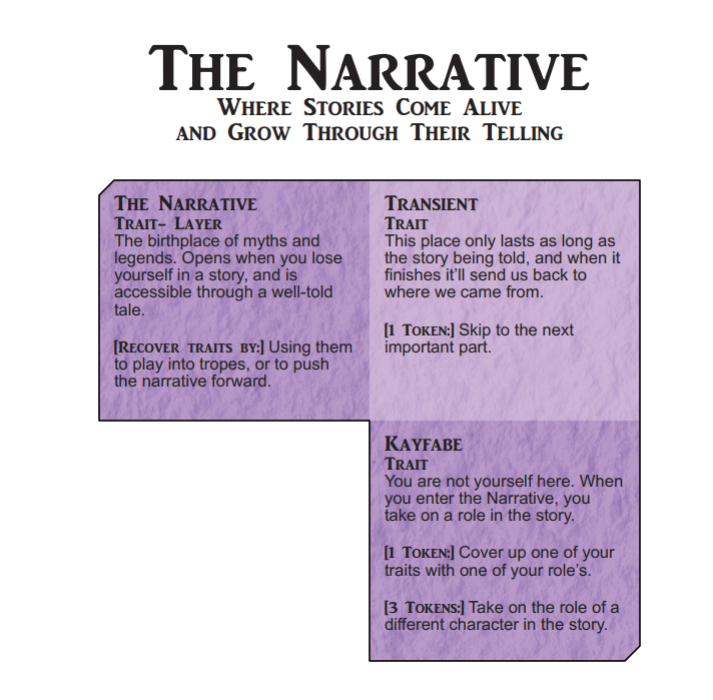
The Narrative page 20 (22)
The Narrative encourages players to temporarily pick up traits & roles, to play Keyfabe, to play a part in the ongoing play/story/tale. To engage with (and maybe even break) the narrative on its level. Just another way the gameplay and world blend, blurry at the edges. I will say several of the Layers play with this threshold in their own unique ways, with The Narrative on the tamer end. I don’t have time to go through them all and also I want you, dear reader, to go read Disparateum. Experience them yourself!
What if you fill up all 8 sections on your character sheet? What then?
Well the Book introduces the Ritual6 of Reshaping
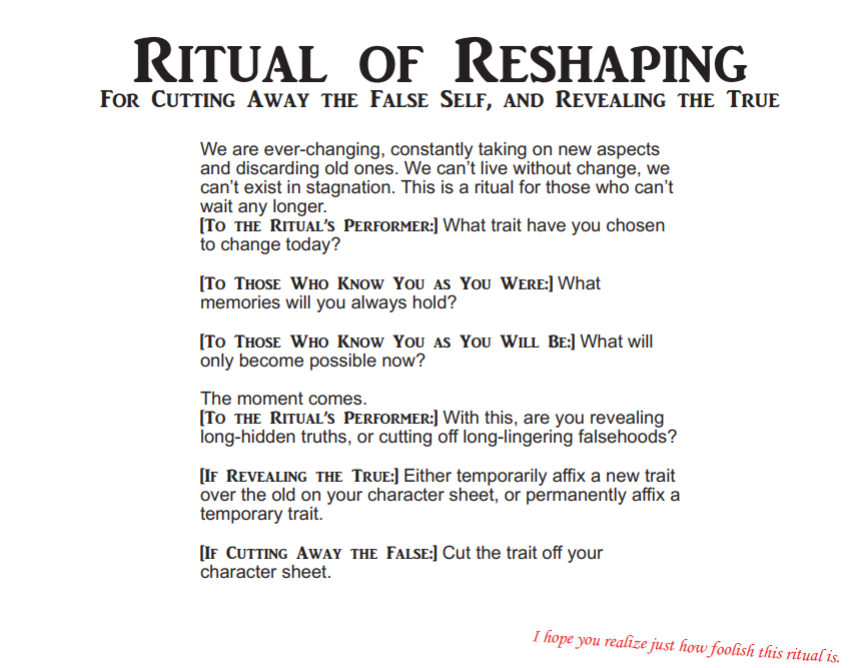
Ritual of Reshaping page 35 (37)
I just can’t emphasize enough how much I love how Disparateum plays with the concept of paper and how it represents you and The City. The Ritual of Reshaping is introduced in The Interior Layer, where every person in The City are Portrayed as giant static marble statues you can bury into to reveal their colourful inner layers. Truly a place you can get lost in yourself, if you’re not careful. But the Ritual of Reshaping helps bring clarity of how you want to move your character forward.
Player characters are characters played by the Player; while all non-player characters are played by the Tower(GM). Important NPCs can have traits too; capped at 4 max. But players are allowed to introduce new NPCs when they want to the scene, as long as it makes sense narratively. There’s also an alternate ruleset that player could potentially swap their own characters to play; just to try something new. Nothing is
scribed penned
No matter how hard some try to make The City Immutable.
Intermission 2
content warning: Racism, Fascism, Torture, Suicide, Child Abuseskip to Act III if you don’t want to read this. Also: spoilers ahead. This is probably too long but its the background info for where Disparateum hit me emotionally.
Talking about real life awful shit
Melbourne/Naarm, where I vaguely live, has been awarded “The most liveable city” multiple times. Other than in 20207, it has always hovered in the top 10. If I were to attribute Melbourne’s “livability” to anything it would be two major factors;
-
A rich culture for a young city stemming from a wide diaspora of people (largely immigrants)
-
investments in public infrastructure (public transport, museums, art, education, health etc.)
Easy example; Melbourne is known for its coffee culture, something we wouldn’t have without Italian & Greek immigrants. You might have heard of the trams & city train loop. Over 20+ museums (Including the Immigration Museum).
Melbourne is hardly a perfect city. It was built on land obtained by displacing indigenous people. It’s definitely not free of racism, and austerity & privatization has hit several public facilities.
But the fact its is a largely welcoming city is what makes it beautiful in my eyes.
In the 1990s mandatory detention was enforced in Australia. Asylum Seekers who came to Australia “illegally”8 via boat would be held (usually indefinitely) en mass in Detention Centres. These were awful conditions; Asylum seekers often went on hunger strikes due to how bad it was. Children were separated from their parents (still held indefinitely in the same facilities). Humanitarian groups made a lot of noise in public media about how inhumane the treatment of Asylum Seekers was. People would constantly protest outside the Detention Centres.
So what did the government do? In 2012 they moved the Centres offshore. Made them inaccessible to press. Out of sight out of mind.
In 2016 the Nauru files came out. Detailing the abuse, sexual assault, suicide and self-harm that were rampart in the Nauru Offshore detention centre. Disproportionally these affected the children in there.
In 2018, 6000 doctors signed an open letter to the government pleading to remove all the children from mandatory detention. 45% of children in offshore detention had self-harmed or attempted suicide.
In August a woman committed suicide in an on-shore detention centre in Melbourne. Turns out they still exists, just smaller scale for people who over stay their visas. This was months after the American Company Secure Journey was awarded a $2.3 billion contract to run these on-shore detention centres. I’m not sure if this story would have made the news if the Chinese embassy hadn’t made it a public matter.
The point of the system is what it does, and Detention Centres torture people. A punishment for the crime of: wanting to live here. I don’t believe that should be a crime. I don’t believe there’s any crime that warrants what people go through in those places.
And on top of that, the two-fold evil of incarceration is this; the people foot the bill.
By 2025 Australia has spent $13 billion on off-shore detention. We spend at least $1 billion a year at this point. All money that could have been spent on public infrastructure, housing, health,education, arts. Making the City wider for everyone.
In 1945, during the height of the White Australia Policy, the British could immigrate via boat to Australia under a policy that was colloquially known as the Ten Pound Pom. A sum today (calculating inflation & conversion) of $730AUD. In 2026 it costs ~$15,000AUD to immigrate to Australia.
~3.2% of Australia’s population is Aboriginal & Torres Strait Islanders9. Everyone else is an immigrant or descended from an immigrant. Yet we’re so quick to forget that.
I cannot understate how important The City is wide enough for all of us is (at least for me). And how the narrative of Disparateum puts it in peril.
SPOILERS AHEAD
The end of Disparateum Act II faces you with a man who would crush everything beautiful about the City in the name of “protecting the beauty of his City”. Deluded that he is justified by his own sense of Divine Manifest Destiny.
And then Disparateum turns to you, and addresses you directly;
![[TO THE PLAYERS:]What will you do now?](/images/theend.png)
Act III
There is no Act III of Disparateum. Yet. Rath is still working on it. But Disparateum Act I & II is a fully functional & immersive game.
As a disclaimer; I haven’t had the chance to play Disparateum; it’s hard to verbally explain so I exclaim “Go read it!” instead. Turns out; really hard to get people to read things (reviews help). And Disparateum is a game that requires other people to play (scheduling is a nightmare please help me).
If I were to have any wish for Disparateum Act III, it would be more example traits and maybe tips on how to write new traits. Currently there’s 20 example traits for Player characters, which might seem like a lot but that’s a small pool when 3~ish Player characters have 3-7 traits each. Of course the game expects you to write your own, but more jumping off points are always good. A blank piece of paper can be creatively intimidating. I found myself when writing the Detective, making all the properties questions. From my perspective I guess questions are just an easy way to interact with a TTRPG’s world in an interesting fashion. But in contrast all the properties on my favourite trait, Inevitable Hubris, are direct statements. And I don’t think any of them would be less fun in play; quite the opposite. A breakdown on what could make a fun or interesting trait might make character creation a little less intimidating.
And If I were to give Disparateum one more star it would be this; the game only has 3 illustrations:
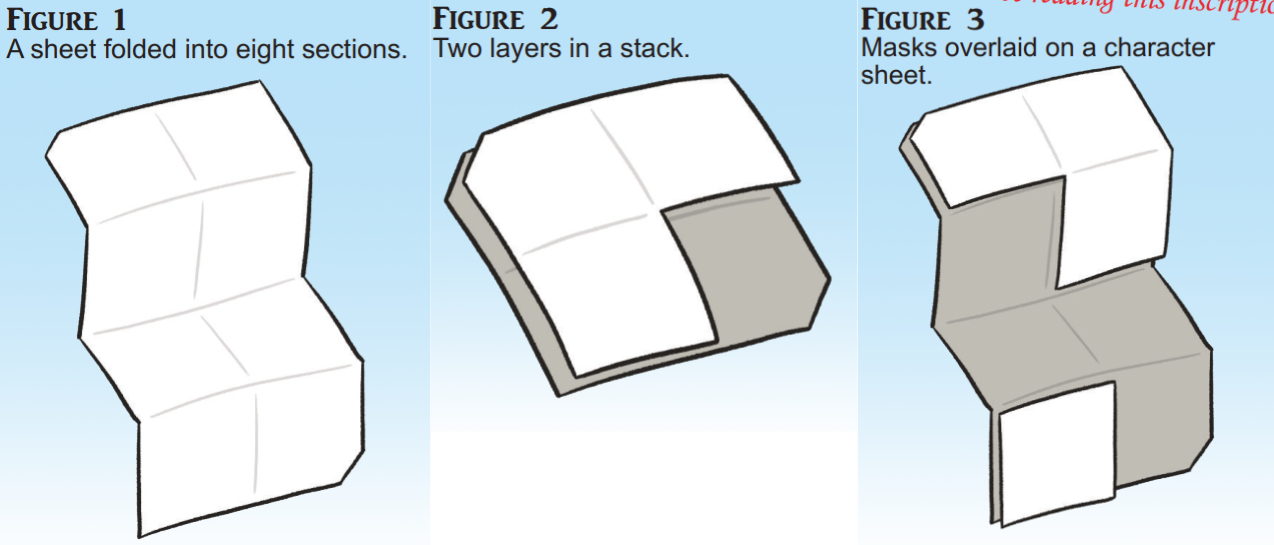
In comparison Disparateum shows how much you can do without illustrations. When reading through Disparateum it never occurred to me how little illustrations there were; I only noticed on my second read through. You can convey emotional narratives with just layout, typography and excellent writing. Setting up a clean layout and then figuring out the ways you can break it to get across whatever in-narrative fuckery is going on:
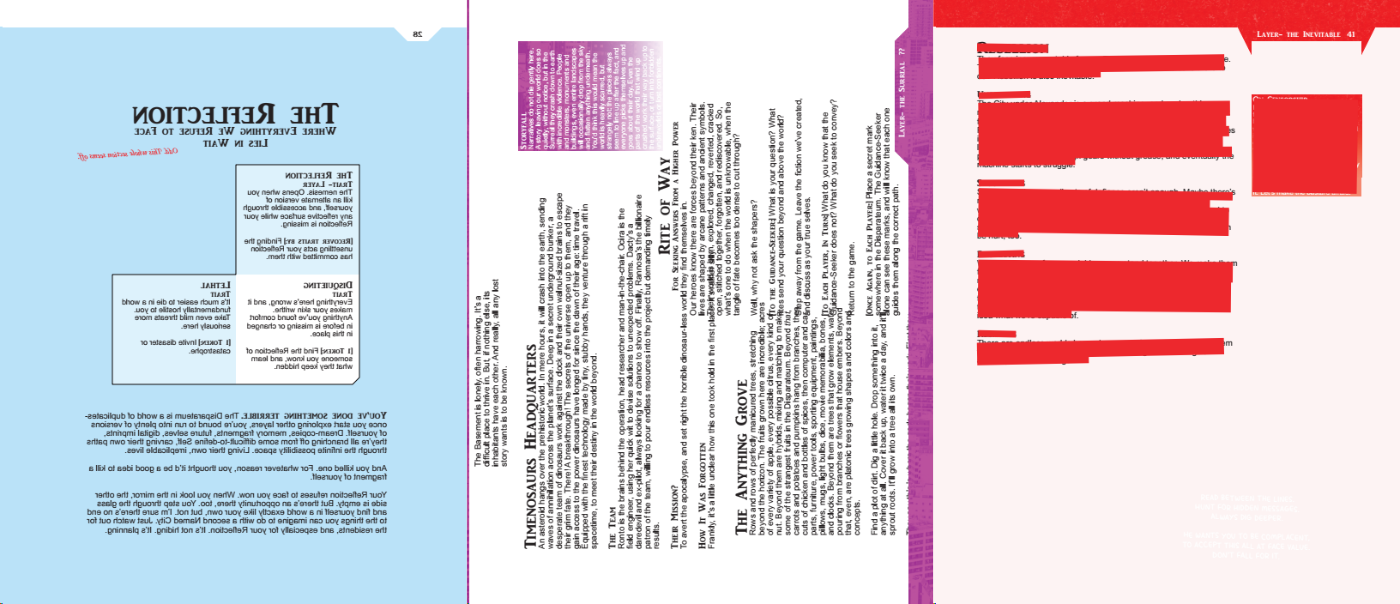
With Affinity being free (for now) the barrier of entry for creating cool PDFs11 has never been lower. You don’t need the stochastic parrot to be able to express your creativity, all you need to do is to write. And Disparateum is a game that wants you to get creative & have fun with it. A game that hands you a blank piece of paper and asks you to write something interesting.
If you forget about it, ignore it
The City is wide enough for all of us
— Disparateum by Rathayibacter
Footnotes
-
I spent way too much time on this, why are tables so fucky wucky in html, do not click inspect elements, it’s a fucking mess ↩︎
-
Tyranny, specifically Voices of Nerat’s shenaningans ↩︎
-
An easy pitfall for anyone writing a TTRPG to descend into ↩︎
-
I won’t touch much on Rituals for this review, but they are a great jumping off point for starting a narrative ↩︎
-
Melbourne had one of the strictest covid pandemic lockdowns in the world, which is my best guess for the reason “why” for this ↩︎
-
Seeking Asylum isn’t illegal but the Government sure likes to treat it like it is ↩︎
-
From the 2021 Census. We just had the 2026 census so the data for that isn’t out yet ↩︎
-
I find it so interesting that what feels like Alex’s break-out point both narratively and metanarratively is falling for/fusing with/speaking through the false nostalgias in The Memory ↩︎
-
P.S. Disparateum is a PDF. If there’s any text that is; Censored, Backwards, Rotated, Running off screen or Invisible you can select it then copy-paste it into notepad, so it’s a bit easier to read. ↩︎